Introduction
Modern customers interact with businesses through multiple digital channels before making a purchase. A potential customer might first discover a brand through a Google search, follow it on Instagram, subscribe to its email newsletter, ask questions on WhatsApp, and finally complete a purchase on the company’s website. Customers expect these interactions to feel connected rather than fragmented.
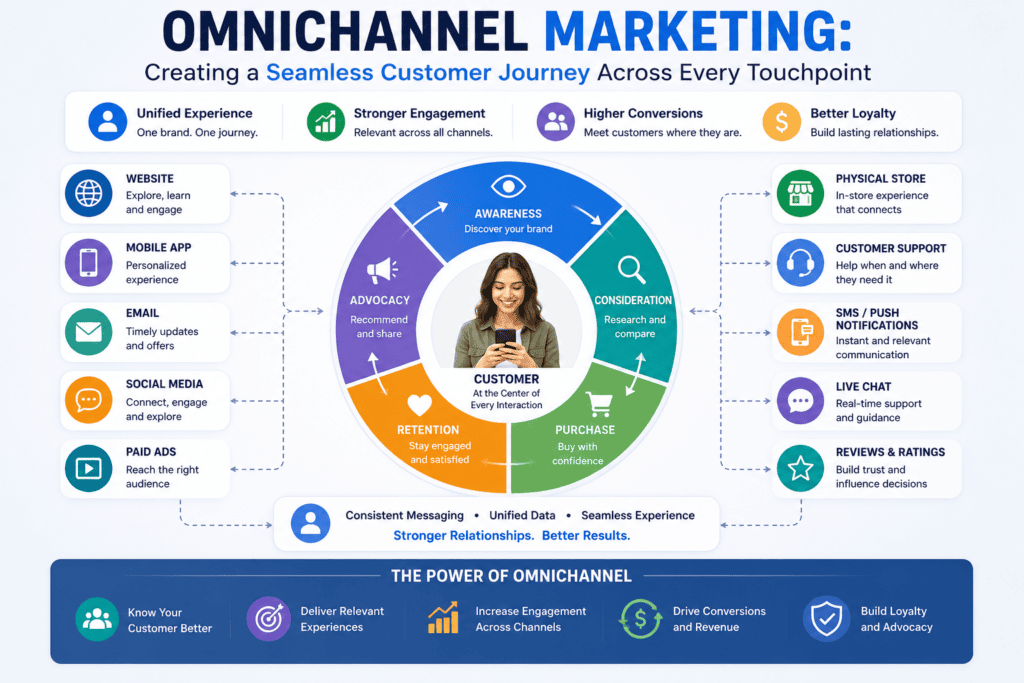
This is where Omnichannel Marketing becomes essential. Omnichannel marketing is a strategy that delivers a consistent and seamless customer experience across all communication channels, including websites, social media, email, search engines, mobile apps, WhatsApp, and even offline interactions.
Unlike traditional marketing, where each platform operates independently, omnichannel marketing integrates every touchpoint into one unified customer journey. Combined with marketing automation, businesses can provide personalized experiences, improve customer satisfaction, and increase sales.
In this article, you’ll learn what omnichannel marketing is, why it’s important, how to create a seamless customer journey, and how automation enhances the overall customer experience.
What Is Omnichannel Marketing?
Omnichannel marketing is the practice of integrating all customer communication channels to provide a consistent and personalized experience throughout the buying journey.
Instead of treating each platform separately, businesses ensure that customers receive the same messaging, branding, and support regardless of where they interact.
For example, a customer might:
- Discover your business through Google Search.
- Visit your website.
- Follow your Instagram page.
- Join your email newsletter.
- Receive promotional offers on WhatsApp.
- Complete a purchase through your website.
- Receive follow-up support via email.
Each interaction builds upon the previous one, creating a smooth and connected experience.
Why Omnichannel Marketing Matters
Consumer behavior has changed significantly over the past decade.
Today’s customers often use multiple devices and platforms before making a purchase decision.
Omnichannel marketing offers several important benefits.
Better Customer Experience
Customers appreciate consistent communication across every platform.
They don’t want to repeat information every time they switch from email to WhatsApp or from social media to your website.
A connected experience builds trust and convenience.
Higher Customer Engagement
Businesses that communicate through multiple channels have more opportunities to interact with potential customers.
Someone who ignores an email may respond to a WhatsApp message or engage with a social media post.
Using multiple channels increases the chances of meaningful engagement.
Improved Brand Consistency
A unified marketing strategy ensures that customers see consistent:
- Branding
- Messaging
- Promotions
- Pricing
- Customer support
Consistency strengthens brand recognition and credibility.
Increased Sales
When customers receive personalized and timely communication throughout their journey, they are more likely to complete purchases and become repeat buyers.
Omnichannel marketing supports long-term customer relationships rather than focusing only on one-time sales.
Building a Seamless Customer Journey
Successful omnichannel marketing focuses on guiding customers smoothly from discovery to purchase and beyond.
Step 1: Social Media Awareness
Many customer journeys begin on platforms such as:
- YouTube
- TikTok
Businesses can attract attention through:
- Educational content
- Short videos
- Customer success stories
- Product demonstrations
- Industry insights
The goal is to encourage users to visit your website or learn more about your business.
Step 2: Website Engagement
Once visitors reach your website, they should easily find the information they need.
Your website should provide:
- Fast loading speed
- Mobile-friendly design
- Clear navigation
- Helpful content
- Strong calls-to-action
Visitors should quickly understand your products, services, and value proposition.
Step 3: Lead Capture
Not every visitor will make an immediate purchase.
Businesses should capture leads using:
- Contact forms
- Newsletter subscriptions
- Free ebooks
- Webinars
- Free consultations
- Discount offers
Collecting customer information allows continued communication through other channels.
Step 4: Email Marketing
Email remains one of the most effective marketing channels.
Businesses can use email to:
- Welcome new subscribers.
- Share educational content.
- Announce new products.
- Send personalized recommendations.
- Offer exclusive discounts.
Email helps nurture leads until they are ready to purchase.
Step 5: WhatsApp Communication
WhatsApp has become an increasingly valuable customer communication channel.
Businesses can use it for:
- Appointment reminders
- Order confirmations
- Customer support
- Promotional offers
- Product inquiries
- Follow-up messages
Since WhatsApp messages often receive high open rates, it serves as an excellent channel for timely communication.
Step 6: Search Visibility
Many customers continue researching even after discovering your brand.
Strong visibility through:
- Google Search
- Local SEO
- Google Business Profile
- Organic content
- Paid search advertising
ensures customers can easily find your business whenever they are ready to buy.
Using Automation to Improve Customer Experience
Marketing automation makes omnichannel marketing more efficient by delivering the right message at the right time without requiring constant manual effort.
Automated Welcome Emails
When someone subscribes to your newsletter, an automated welcome email can:
- Introduce your business.
- Share valuable resources.
- Explain your services.
- Encourage further engagement.
This creates a positive first impression.
Lead Nurturing Campaigns
Not every lead becomes a customer immediately.
Automated email sequences can gradually educate prospects through:
- Helpful articles
- Case studies
- Customer testimonials
- Product demonstrations
- Frequently asked questions
These campaigns build trust over time.
Abandoned Cart Recovery
E-commerce businesses often lose sales when customers abandon shopping carts.
Automation can send reminder emails or WhatsApp messages encouraging customers to complete their purchases.
Many businesses recover significant revenue through automated cart recovery campaigns.
Personalized Product Recommendations
Automation systems analyze customer behavior to recommend relevant products based on:
- Previous purchases
- Browsing history
- Customer interests
- Shopping preferences
Personalized recommendations increase both customer satisfaction and sales.
Customer Follow-Up
Automation continues after the purchase.
Businesses can automatically send:
- Order confirmations
- Shipping updates
- Product usage tips
- Feedback requests
- Review invitations
- Loyalty rewards
These interactions strengthen long-term customer relationships.
Best Practices for Omnichannel Marketing
To create a successful omnichannel strategy:
Keep Branding Consistent
Use consistent:
- Logos
- Colors
- Messaging
- Tone of voice
- Visual identity
Customers should recognize your brand regardless of the platform.
Understand Your Customer Journey
Map every stage of the customer experience.
Identify:
- Where customers discover your business.
- Where they drop off.
- Which channels generate the highest conversions.
Understanding customer behavior improves marketing decisions.
Personalize Communication
Customers appreciate messages tailored to their interests.
Use customer data to personalize:
- Emails
- Product recommendations
- Promotions
- Advertisements
Relevant communication produces better engagement.
Integrate Your Marketing Tools
Connect your:
- CRM
- Email marketing software
- Website
- WhatsApp Business
- Advertising platforms
- Analytics tools
Integration ensures customer information flows smoothly across channels.
Common Omnichannel Marketing Mistakes
Avoid these common errors:
- Treating each marketing channel separately.
- Sending inconsistent messages.
- Ignoring mobile users.
- Failing to personalize communication.
- Using automation without human oversight.
- Neglecting customer support after purchase.
- Collecting customer data without using it effectively.
A successful omnichannel strategy focuses on creating a unified customer experience.
The Future of Omnichannel Marketing
Artificial intelligence is transforming omnichannel marketing by enabling businesses to deliver even more personalized experiences. AI can predict customer behavior, recommend products, automate conversations, optimize campaign timing, and analyze customer interactions across multiple channels.
As customer expectations continue to rise, businesses will increasingly rely on automation, first-party data, and intelligent marketing platforms to deliver seamless experiences. Companies that successfully combine technology with genuine customer care will build stronger relationships and maintain a competitive advantage.
Conclusion
Omnichannel marketing is no longer optional for businesses that want to compete in today’s digital marketplace. Customers expect consistent, personalized, and connected experiences whether they interact through social media, email, websites, WhatsApp, or search engines.
By integrating every customer touchpoint and using automation to deliver timely and relevant communication, businesses can create smoother customer journeys, increase engagement, improve customer satisfaction, and drive higher sales. Organizations that invest in omnichannel marketing today will be better equipped to build lasting customer relationships and achieve sustainable growth in an increasingly connected digital world.
